Tuesday, May 13, 2014

Napoleon Dynamite (2004)

There are some movies that just make us ask ourselves, "Why?" Napoleon Dynamite is one of those films (and I mean that in the best possible way). I don't know what it is about this film, but I fell in love with it the very first time I watched it.


The film follows nerdy high school student Napoleon's (Jon Heder) adventures with his new friends Deb (Tina Majorino) and Pedro (Efren Ramirez). Napoleon also has to deal with his annoying older brother, Kip (Aaron Ruell), and their Uncle Rico (Jon Gries) who can't leave the past behind. Napoleon faces the trials of high school: asking a girl to the dance, helping his best friend run for class president, dealing with his brother's online dating, cleaning chicken coops...the usual. 

I'm not going to lie, what I love most about Napoleon Dynamite is the fact that it has no plot whatsoever. Nothing ties anything together in this film and it's glorious. One minute Napoleon is yelling at his pet llama, Tina, to eat the food he's throwing at her, and the next we see Uncle Rico chucking a piece of steak at Pedro's bike. I think the fact that nothing makes sense makes the movie that much funnier. Every scene is just so ridiculous, and it's almost impossible to guess what's coming next because it really could be anything.

I adore the acting in this movie. Every character is over-the-top and weird, and every actor played his or her part perfectly. The actors were able to take these crazy characters and still manage to make them real, rather than turn them into the caricatures that they could've easily become. It's hard to take an over-the-top role and make it real, and I commend the actors for doing so.

I'd also like to talk about the music in the film. It's just so...outdated. The one thing I find confusing about the film is its setting (time wise), and that's thanks to the music. The town seems to be stuck in the 80s most of the time--the clothes, the cars, the music that sounds like it belongs in an arcade game...it all seems very old. The music also plays into the comedy of the film, since it's so weird. One can't help but laugh at the synthesizer underscoring the scenes.

Most people I know refuse to give Napoleon Dynamite a chance, since it's "pointless". Please don't be one of those people, if you haven't already seen it. Yes, it's stupid; I won't deny that at all. But stupid can be really, really funny--this is one of those times. 

Score: 10/10
Recommend: Only if you're prepared for complete and utter stupidity (in other words...yes)

Saturday, April 12, 2014

Masquerade (2012)

I'll admit it; I was a bit hesitant to watch this film at first. A foreign period piece that I knew next to nothing about? I wasn't completely sold. Boy, was I wrong. Masquerade was a funny, powerful, and overall delightful film; I'm so glad I was exposed to it.


The film, directed by Chang-min Choo, begins by introducing us to King Gwanghae (Byung-hun Lee), who is rigid and cold. The king suspects treason, so he orders his councilor to find a double to stand in for him. The councilor, Heo Gyun (Ryu Seung-Ryong), finds Ha-seon (Lee), a jester who looks exactly like the king. Sure enough, the king is poisoned and he is carted off to a remote temple, leaving Ha-seon to take his place while he recovers. Heo Gyun teaches Ha-seon how to act like the king (well, he tries to teach him), leading to many antics with the king's concubines and the queen (with whom Ha-seon begins to fall in love). However, it isn't all fun and games for Ha-seon. He has to make decisions regarding the state (decisions that, when made by the real king, hurt the common people like him), and he learns of the injustice done to one young concubine's family. As the king's return draws near, Ha-seon realizes that he wants to be king...but Gwanghae has other (much less appealing) plans for Ha-seon.

First off, I thought the film was incredibly well-acted. Hats off to Byung-hun Lee for playing two completely different characters and making both believable. Every time Ha-seon smiled, I wanted to smile right back at him; he was just so lovable. I also thought that Hyo-ju Han did a wonderful job playing the queen; I found myself wishing she'd smile just as much as Ha-seon did.

Another strong point of the film was, in my opinion, its score. Certain pieces reminded me of other films' scores, but I can't quite put my finger on which ones. I really loved the piece that played whenever Ha-seon looked or acted especially like the king; it was so powerful and it honestly gave me chills.

I wasn't expecting the film to be as comedic as it was; I was pleasantly surprised. I was thoroughly entertained by watching a commoner try to act like royalty (I'm sure I'd act the same way as Ha-seon were I ever put into that situation). My personal favorite mishap was his whole ducking-behind-the-wall bit; I think that was the moment that sold the movie for me.

My only problem with the film was that I got a little lost at one part towards the end (which I won't talk about--this is a spoiler-free blog, thank you very much). Something happened that I didn't realize had happened, and I was confused for a brief amount of time (but I eventually found my way back). The rest of the film was very easy to follow, though, so getting lost at one minor part wasn't a huge issue.

Score: 9/10
Recommend: Of course!

Thursday, March 6, 2014

The Lone Ranger (2013)

The idea of “justice” gets thrown around quite often. What exactly is justice? That is exactly what John Reid (Armie Hammer) must ask himself when he gets thrown into the role of a western hero and assumes the persona of the Lone Ranger.


The movie begins with a young boy walking through a carnival in 1933 San Francisco. He is dressed as his idol—the Lone Ranger. He enters an exhibit (“Life on the Frontier” or something to that extent) and comes across a wax figure of a Native American. This wax figure is not really a wax figure at all; it’s Tonto (Johnny Depp), an elderly man with a story to tell. He sees the boy’s costume and begins to regale him with the tale of how the Lone Ranger became the Lone Ranger. We are taken back to 1869; the towns are small, the frontier is large, and the American Dream is larger still. We’re introduced to John Reid, a peaceful lawyer traveling to see his brother Dan (James Badge Dale) back home in Texas. On the train, the ride is disrupted by the cannibalistic outlaw Butch Cavendish (William Fichtner) and his gang. John attempts to take the nonviolent route by ordering them under arrest, but Cavendish overpowers him and locks him up with none other than our friend Tonto. John and Tonto are forced to work together in an attempt to stop the criminals; the outlaws, however, derail the train and escape. Back in town, John is reunited with Rebecca (Ruth Wilson), his childhood sweetheart—and now Dan’s wife. Dan and the other rangers prepare to leave town again to pursue Cavendish, and John tags along. Soon, the men are led into a trap and John is the lone survivor. Tonto saves him with the help of the mystical “spirit horse” and the three embark on a journey for justice.

Many critics strongly disliked the film; I’m inclined to disagree. I really enjoyed the film and ended up seeing it three times in theaters. I felt that the film sent a very interesting message, and I liked that Disney took some risks with it.

Before I get into the deeper parts of the film, let’s talk about the actors. Apart from the two protagonists (Hammer and Depp), the antagonist (Fichtner), and one minor character (Helena Bonham Carter), the cast was relatively unknown to me. I enjoy watching actors I haven’t seen before because I don’t have set expectations for them. I did, however, have higher standards for the four bigger names; I’m pleased to say that they met those standards. Hammer and Depp had great chemistry as John and Tonto, respectively, and I’d like to see them in more films together. They pulled off the love-hate friendship very well and had an interesting dynamic onscreen (which may have been partially due to the fact that they’re both quite pleasing to look at). Fichtner shined in the role of the villain; I feel that, if the film had done better, Disney could have easily marketed him as one of its most evil villains. Most of his scenes were delightfully cringe-worthy; I think that every good villain should make the audience cringe. Helena Bonham Carter was as wacky as ever in her role as Red Herrington, the prostitute with a secret up her sleeve—or should I say skirt, since that secret happens to be an ivory leg that’s really a gun?

I also want to talk about the cinematography in this film. Actually, “gush” would be a more appropriate term. The cinematography in this movie is amazing. Disney’s live-action films never cease to amaze me with their scenery, and The Lone Ranger is no exception. I’ve never been a huge fan of desert landscapes, but the scenes in this movie made me want to don a ten-gallon hat and some boots and ride into the sunset. One of my favorite shots in the film is the first time John sees the spirit horse. The horse is high up on a bluff, and the camera angle is able to capture the sky and the canyon around him, showing off the contrasting hues…it’s stunning. I won’t talk about my absolute most favorite shot for fear of spoilers (it’s at the very end of the movie), but I will tell you that it’s simply gorgeous.

Earlier, I mentioned liking the risks that Disney took with this film. I believe that Disney’s riskier films are some of its greatest and most underrated films (such as 1996’s The Hunchback of Notre Dame). This film’s biggest risk has got to be its blatant mention of cannibalism. Although we never outright see Cavendish eating another human, we see a reflection of his silhouette as he eats a man’s heart, and later he licks the blood off of a razor after it cuts his cheek. The Lone Ranger is not the first Disney film to feature prostitutes, but it does give them a larger role than, say, Pirates of the Caribbean (another Jerry Bruckheimer film in which Johnny Depp has an interesting relationship with working girls). Red and her girls at the brothel aren’t sweet and sugar-coated…at least not for Disney.

I also mentioned the film’s message. It showed that not all white men were as innocent as history shows them to be, nor were all Native Americans as savage as some believe them to be. In fact, the film’s antagonists are all white; most of the Native Americans in the film aren’t the protagonists, but they aren’t the bad guys either. The film shows “progress” (Manifest Destiny, western expansion…take your pick) in an extremely negative light; again, those fighting for “progress” are all white men. I think it’s important to show that, in a lot of cases, the white race was the bad guy, considering the fact that many history books today try to cover that up.

Finally, I want to talk about the music in the film. I’m a sucker for movie soundtracks, especially Hans Zimmer’s scores. Parts of this score are reminiscent of the Pirates of the Caribbean soundtracks, but with a more “western” twist. Then, we have the finale score…oh, the finale score. The Lone Ranger wouldn’t be complete without four things: the black mask, the white hat, the white horse, and the William Tell Overture. Zimmer puts his own exciting twist on the piece by incorporating romance, action, and suspense into it. There are also brief moments that have the same feel of the Pirates score, which makes a mega-fan like me very happy. Even if you’re not a movie score fan, I urge you to give this film’s soundtrack a chance—it’s worth it.

The one problem I had with the movie was its geographical/historical inaccuracy. I’m a bit of a history geek, so I was a little bothered by the fact that the film claimed that Promontory Point (or Promontory Summit, as it’s referred to in the film), the meeting place of the Pacific and Central Railroads, was located in Texas; it is, in fact, located in Utah. I’ve tried giving the film the benefit of the doubt for this mistake many times, but I still can’t come up with an excuse as to why the film would make this mistake. However, considering that this is the only issue I have with the film, I’m willing to forget about it.


The Lone Ranger may be cheesy and far-fetched at points, but it was able to make me forget about my woes for two and a half hours, and I think that that’s the best thing a movie can do for someone. I chose to ignore the other critics’ opinions and see the film, and I recommend doing the same to anyone who will listen.

Score: 10/10
Recommend: Yes, but only if you're willing to accept its goofiness

Thursday, February 20, 2014

12 Years a Slave (2013)

I usually tend to shy away from slave narrative films. I find they're too graphic and they're very hard to watch. However, Steve McQueen's 12 Years a Slave seemed different to me even before I viewed it. Just from the trailer I knew I'd enjoy the film; I was right.


Now, by "enjoy" I don't mean that the film brought me great joy while watching it--it was far too heart-wrenching for that. By "enjoy" I mean that I was captivated. I saw what the characters saw; I felt what they felt. I wanted to know what was going to happen next, but at the same time I was scared of finding out what was to come.

The film begins with Solomon Northup (Chiwetel Ejiofor) living life as a free black man in 1841 New York. He and his family were born free and life a comfortable life. When Solomon is offered a job in Washington, D.C., he is kidnapped and sold into slavery. He is given the identity of Platt, a runaway slave from Georgia, and is bought by William Ford (Benedict Cumberbatch). Ford treats Platt and his other slaves well; he even rewards Platt with a fiddle after he learns he can play. However, Ford's carpenter, John Tibeats (Paul Dano), begins harassing Platt and eventually attempts to hang him after Platt fights back. Ford realizes he can't keep Platt safe, and sells him to Edwin Epps (Michael Fassbender), another plantation owner. Epps is not nearly as kind as Ford; he is an alcoholic pedophile who has no problem with using a whip. After ten years of living and working on Epps' plantation (he spent two with Ford), Platt meets Bass (Brad Pitt), a Canadian carpenter. Bass agrees to help him return home; shortly after, one of Solomon's friends from New York travels to Epps' plantation and rescues Solomon. After twelve years, Solomon returns home and is reunited with his family.

After watching the film, it's easy to see why it's been nominated for so many awards. The cinematography was incredible, as was the acting. Ejiofor's facial expressions throughout the film were so moving; I felt everything he was feeling. As for the cinematography, I loved how it showed off the beauty of the South through the ugliness of what was occurring in the region. As backwards as some of the South may be, it sure is pretty.

I also liked how the violence of slavery was handled. As I mentioned before, most slave narratives are very graphic; they seem to focus too much on the beatings. While 12 Years did show the brutality of slavery, it wasn't the sole focus of the film. The violence was not gratuitous; it had a purpose. Going along with the theme handling things well, I liked how not every white person in the film was "evil". In most movies about slavery, every white person is usually a bad guy. While most of the whites in 12 Years were bad people, there were a few good white men: Ford and Bass, for example.

The one problem I had with the film was its timeline. I knew that by the end of the movie twelve years would have gone by, however it was hard to keep track of said years. I wasn't aware that two years had passed at Ford's plantation until I was told; I thought it was only a few months. By the time Platt met Bass, I had assumed that only eight years or so had passed. I'm not sure if I just missed clues that explained the timeline, or if there were none at all.

I truly believe that 12 Years a Slave should win at least the Best Picture award at the Oscars this year, and I certainly hope it sweeps the other categories as well. It's one of the most extraordinary films I've seen in a long time, and I hope others feel the same.

Score: 9.5/10
Recommend? YES!

Thursday, December 12, 2013

A Christmas Story (1983)

It was so, so hard trying to choose my favorite holiday film...in the end it came down to either A Christmas Story or Gremlins. Now I know how cliche this is, picking one of the biggest holiday classics as my favorite Christmas film, but I love it too much not to pick it. This movie always puts me in a good mood, and I love watching it with my family.


Bob Clark's film centers on nine-year-old Ralphie Parker (Peter Billingsley) and his desire for a Red Ryder BB Gun for Christmas. Throughout the film his wish is shot down repeatedly (pun intended) by multiple adults (including Santa himself) telling him, "You'll shoot your eye out." Ralphie endures neighborhood bullies, mean teachers, and not-so-tasty bars of soap in the days before Christmas. I can't tell you if Ralphie gets his gun or not, but I can tell you that you won't quit laughing from the movie's start to its finish.

I actually watched this movie all the way through for the first time just a few years ago, but I instantly knew I would make a tradition of watching it every year. It always puts me in a great mood and it has led to so many inside jokes between my parents and me (including a recreation of Ralphie's pink bunny pajamas).

I love how the movie is shown from the perspective of a nine-year-old. Having been nine years old once myself, I can definitely confirm the credibility of Ralphie's daydreams and Christmas wishes. The perspective puts such an innocent spin on the film, which is something I think we all need to see every once in a while. The viewer easily falls in love with Ralphie and feels like a member of the Parker family (however I would be a bit more sympathetic toward Ralphie's cause than his parents). We laugh with Ralphie, we cry with Ralphie, we sit through...interesting...renditions of "Jingle Bells" and "Deck the Halls" with Ralphie.

The writers did an excellent job with Ralphie's character. Sometimes child characters can get annoying after a while, but Ralphie never does. Again, I think his innocence and determination play into that. Ralphie doesn't have time to become annoying because he is always focused on his goals: getting a good grade on his paper, getting the BB gun, getting rid of his bunny pajamas, etc. Ralphie is so motivated that he seems older than he really is at times; then, just as soon as it's gone, his nine-year-old side returns (which is not a bad thing by any means). Also, Ralphie is simply too adorable to be annoying. (What? His two-sizes-too-big glasses are precious!)

I also love the time period that the movie is set in: the 40s. Thanks to Bing Crosby, I always think of the 40s at Christmas time--this movie just fuels the fire. A Christmas Story does a wonderful job of sticking to the time period; the costumes and props work perfectly, and I love the little nod to the (still new at that time) Wizard of Oz movie.

I'm very happy to say that A Christmas Story will remain at the top of my Christmas movie list for many, many years into the foreseeable future. It's one of those Christmas movies that makes me ask myself if it's socially acceptable to watch in June, because it's just that great.

Score: 9.5/10
Recommend? Absolutely


Tuesday, November 12, 2013

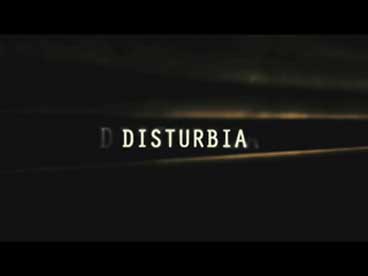
Disturbia (2007)

"Every killer lives next door to someone" is the chilling (and albeit cheesy) tagline for D.J. Caruso's thriller Disturbia. I've seen this movie countless times, and every time I watch it I'm reminded of how much I love it.


The film is about a teenage boy, Kale (Shia LaBeouf), whose father is killed in a car crash. A year later, Kale is sentenced to house arrest all summer break after punching his teacher for bringing up his dad. Since Kale's (only?) friend, Ronnie (Aaron Yoo), is on vacation for a short time, he begins to spy on his neighbors, including quiet Robert Turner (David Morse) and his pretty new neighbor, Ashley (Sarah Roemer). One night Kale hears about recent murders in his area on the news; he puts two and two together and begins to suspect Robert Turner. Together, Kale, Ronnie, and Ashley start spying on Turner, which leads them down a dangerous path.

This is one of the few thriller movies that actually scares me...I think it's the multitude of dead bodies at the film's climax (and to think I wanted to go into forensics...). Disturbia actually reminds me a lot of Scream, just with a lot (I mean a lot) less blood and a better love story. It's intended to scare, but often times the comedy overshadows the horror. A prime example (in Disturbia, not Scream) is when Kale attempts to ruin Ashley's party. I can watch that scene over and over and still laugh the entire way through. The great thing about the film is, though, that it can reel itself back in and scare the you-know-what out of its audience ten minutes later.

One scene in particular that I'd like to talk about occurs about halfway through the film, when Ashley is leaving the hardware store in an attempt to follow Robert while Ronnie and Kale are sneaking into his car. Robert has disappeared and Ashley is in her car on the phone with Kale when she suddenly slams on her breaks--Robert is standing right in front of her car. He walks over to her (open) passenger window, reaches through, turns off her car and unlocks the passenger door, and climbs in the car, locking the door behind him. The scene is so tense it's hard for me to breathe, and I'm just watching it on a TV screen. Morse and Roemer do a fantastic job in this scene and I just get chills every time I see it.

Even if you're not big on scary movies, I'd definitely recommend Disturbia--I was a complete scaredy cat the first time I saw it, and now it's one of my favorite movies. Although it is scary, there are so many other elements in the movie that I'm sure there's something for everyone to enjoy. And remember: every killer lives next door to someone.

Score: 9.5/10
Recommend: Yes!

Thursday, October 17, 2013

Who Framed Roger Rabbit (1988)

Everyone loves classic cartoons. But what if your favorite cartoon character was suddenly thrown into a murder mystery film? In Who Framed Roger Rabbit, this is exactly what happens.
Jaded private eye Eddie Valiant (Bob Hoskins) is called in to follow film star Roger Rabbit's wife, Jessica (Kathleen Turner), to find out if she's cheating on him. One catch: Roger (Charles Fleischer) and Jessica are cartoons ("toons"). In a world where cartoons and humans live and work together, nothing is as it seems. Soon Eddie's investigation of Jessica turns into a full-blown murder investigation when Marvin Acme, head of Acme Corporation, is killed after pictures of Jessica and him are shown to Roger. Roger is the prime suspect, and Judge Doom (Christopher Lloyd) will see to it that nothing stands in the way of catching him. Doom sends out his cronies--cartoon weasels--to capture and "dip" Roger (Dip is Doom's creation and is the one thing that can kill a toon). Roger shows up at Eddie's apartment and begs for help, claiming that he's innocent. Eddie reluctantly agrees to help the rabbit, which leads to many shenanigans and surprises.

I quite enjoyed Who Framed Roger Rabbit; I like that Disney took some risks with it--it wasn't a kids' movie, but it had elements to keep the young ones entertained (Roger's silly antics, for instance) while still creating an interesting plot line for the older crowd. I think the film also sent out some great messages. Two that stand out in my mind are Roger's lines about laughter ("A laugh can be a very powerful thing. Why, sometimes in life, it's the only weapon we have.") and Jessica's quip about her appearance ("I'm not bad. I'm just drawn that way."). Both of these lines represent ideas that people need to remember more often: enjoy life, and don't judge a book by its cover.

It was also refreshing to see some classic cartoon characters in the film. Growing up, I always knew who Betty Boop was because she was my grandmother's favorite character (her name was also Betty, so we all called her Betty Boop); when I saw her in the film I couldn't help but smile. I also enjoyed seeing some of Disney's "forgotten" characters of the 40s, characters whose films aren't as well-known anymore.

Yes, the film is goofy. Yes, some parts are very (very) far-fetched. But what else would you expect from a film where humans and cartoons coexist? If you can handle cheesy, I highly recommend this film for its cinematic elements (my favorite shot is Eddie's shadow as he's unlocking his office door...very noir) and lovable characters (oh come on, Roger's adorable).

Score: 9/10
Would recommend? Yes